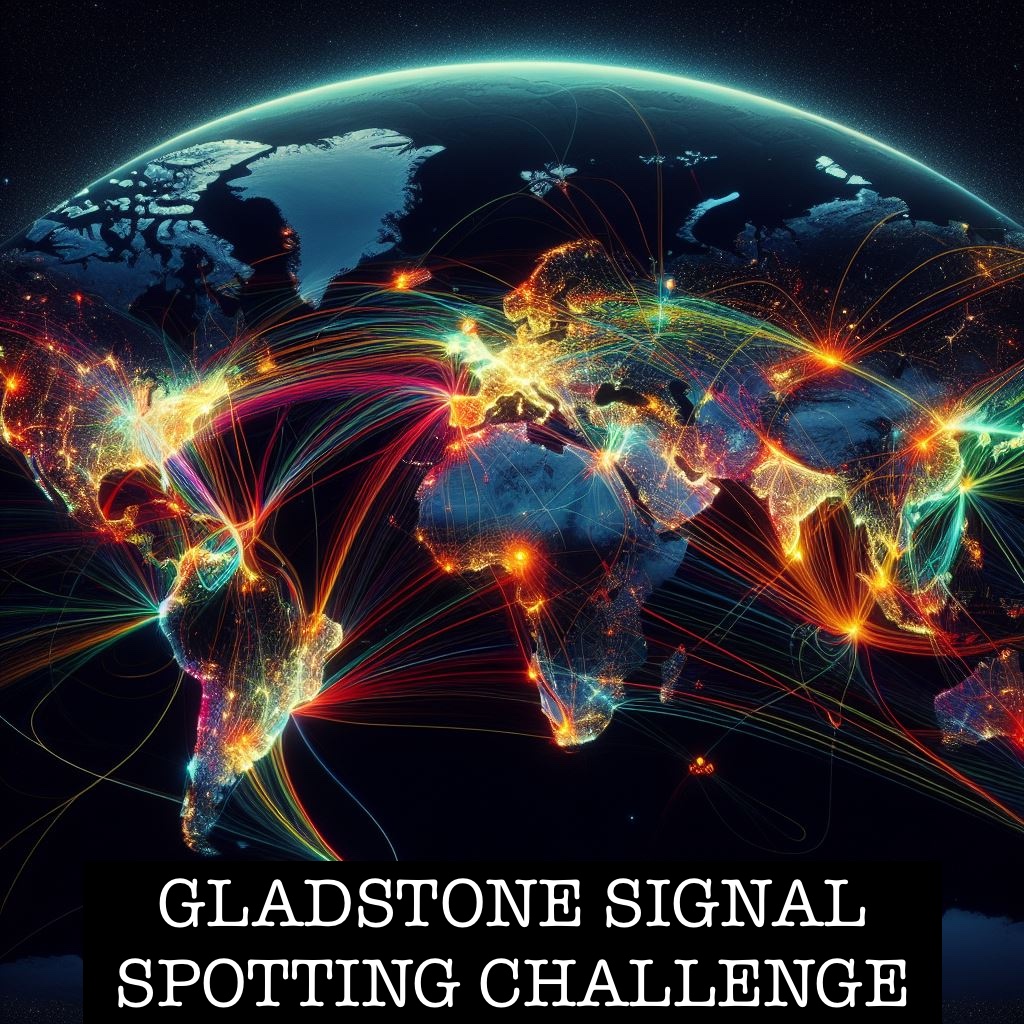
HamSCI is pleased to announce the results from the inaugural running of the Gladstone Signal Spotting Challenge (GSSC). Held during the October, 14, 2023 North American annular solar eclipse, the competition was designed to recognize operators of digital mode stations who contribute valuable data to ionospheric research. The HamSCI GSSC Score Adjudicator found over 713,500 'spots' attributable to the 68 entrants in the three databases named below - that's a lot of spots!
Receiving stations uploaded their records to sites such as PSKreporter.info, WSPRnet.org and reversebeacon.net. Transmitting stations were received by stations worldwide who uploaded to those same databases, creating records of the transmitting stations’ activity.
Full results for the 2023 running of the GSSC can be found here.
Consider entering the upcoming event on April 8, 2024! FAQs and Rules are available here.
Congratulations to all who entered. HamSCI appreciates your contribution to space physics and citizen science via on-air amateur radio competition.
Data (logs, spotting network data, scoring files, bonus point entries) from all four events can be found on Zenodo.org by searching for the HamSCI Community and then for the event(s) of interest. The data is available for anyone to use for research purposes or to satisfy an individual's curiosity. Note: If the data is used for research, cited in an article, paper, poster or presentation, the data curator and lead researcher would expect and appreciate the courtesy of receiving credit for their work. Questions regarding attribution should be directed to HamSCI, via e-mail.
If you have any questions on the results, please e-mail HamSCI .
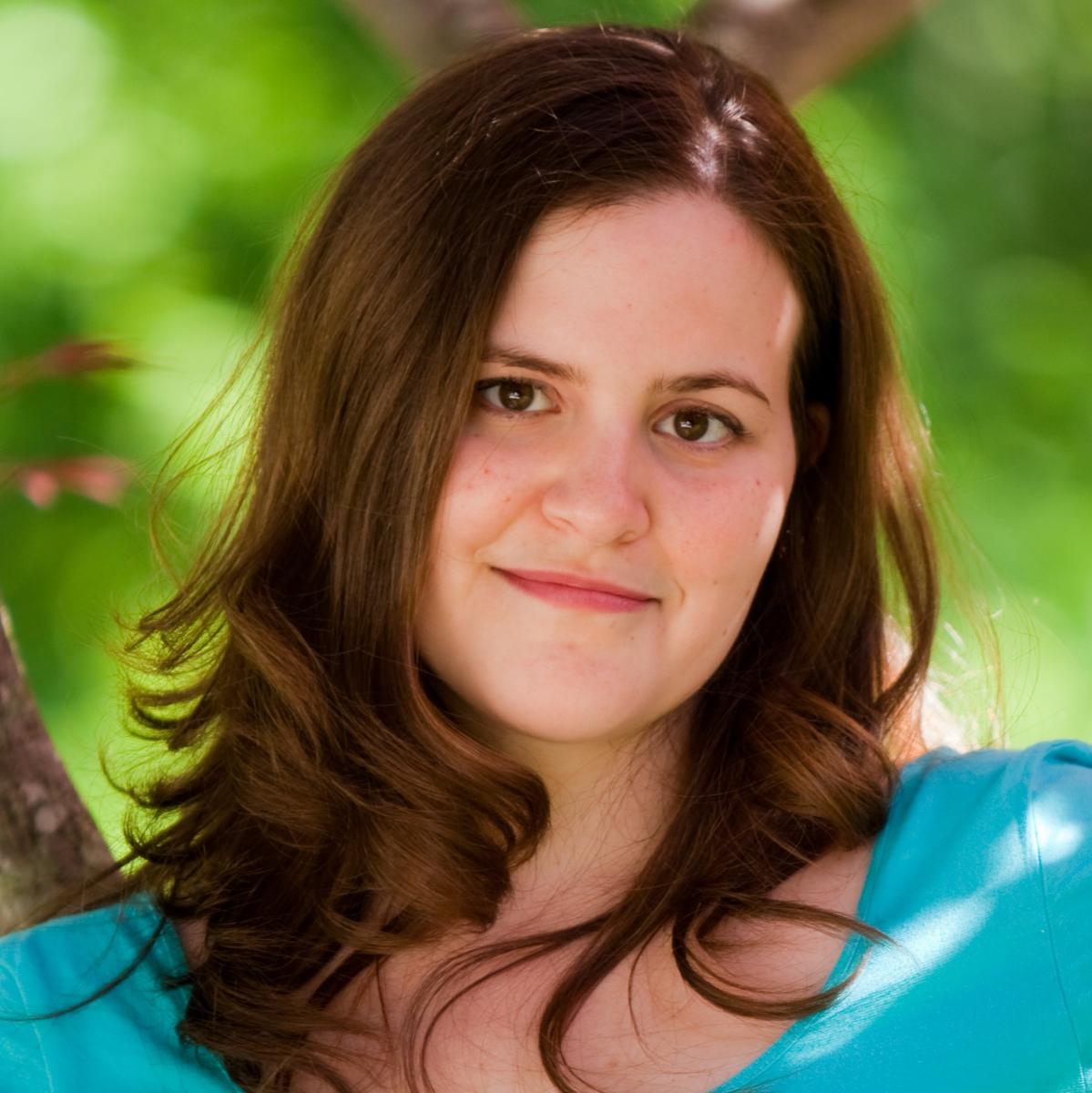
HamSCI member McKenzie Denton, KO4GLN, has reason to be proud of not one but two ham radio related accomplishments in 2023: A scholarship to Old Dominion University and a winning essay which earned her a new Icom radio.
The scholarship was awarded by the ARRL Foundation Scholarship Program, which administers over 100 scholarships, funded by an array of donors. McKenzie's 2023 scholarship* was made possible by a grant from YASME, a worldwide foundation which supports people and projects that help amateur radio flourish.
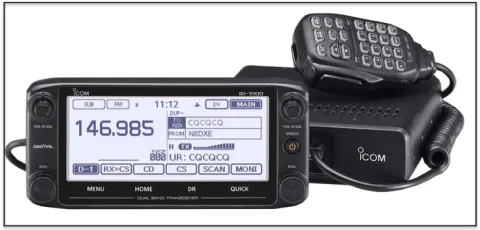
Her new Icom ID5100AD Dual Band VHF/UHF radio was earned by having her essay "What Attracted me to Amateur Radio" chosen second out of thirty entries in a competition sponsored by the Intrepid DX Group. The IDXG is an international group of radio amateurs, devoted to many topics, among them conducting scientific research exploring electromagnetic wave propagation. Her essay, a worthwhile read, is available here. It tells McKenzie's story of turning a negative (the near shutdown of the secondary education system during the pandemic) into a positive (her earning an amateur radio license and subsequently participating in a wide array of ham activities and organizations, including HamSCI).
Congratulations, McKenzie!
*One scholarship is reason to celebrate - while two call for serious acclaim. McKenzie won an ARRL Foundation scholarship in 2022, funded by the Amateur Radio Digital Corporation (ARDC). Side note: Both YASME and ARDC support HamSCI through project grants and funding of HamSCI's participation at events such as the Dayton Hamvention®. Much appreciated!
A team of scientists led by Alex Chartier at Johns Hopkins Applied Physics Laboratory just published a study Validating Ionospheric Models Against Technologically Relevant Metrics, published in the peer-reviewed American Geophysical Union journal Space Weather. Co-authors include Josh Steele, G. Sugar, David Themens, Sarah Vines, and Joseph Huba.
The paper describes how novel, open access tools were used to validate Sami is Another Model of the Ionosphere (SAMI3) in terms of the following metrics:
Errors on GPS 3D position
HF ham radio communications via WSPR Signals
Peak F-region density (with machine learning algorithms used to "clean" the data used in this analysis)
Excerpted from the paper:
...The ability of the ionosphere to reflect radio signals back down to Earth is the central property that led to its discovery. Several important technological applications make use of this property, notably geolocation, skywave over-the-horizon radar and long-distance communications. In recent years, radio amateurs (or “hams”) have begun probing HF propagation paths (e.g., Frissell et al. 2014) using the WSPR protocol designed by Joseph Taylor, a nobel laureate and ham. A substantial database of radio links has been established, that we have used to test propagation paths in ionospheric models...
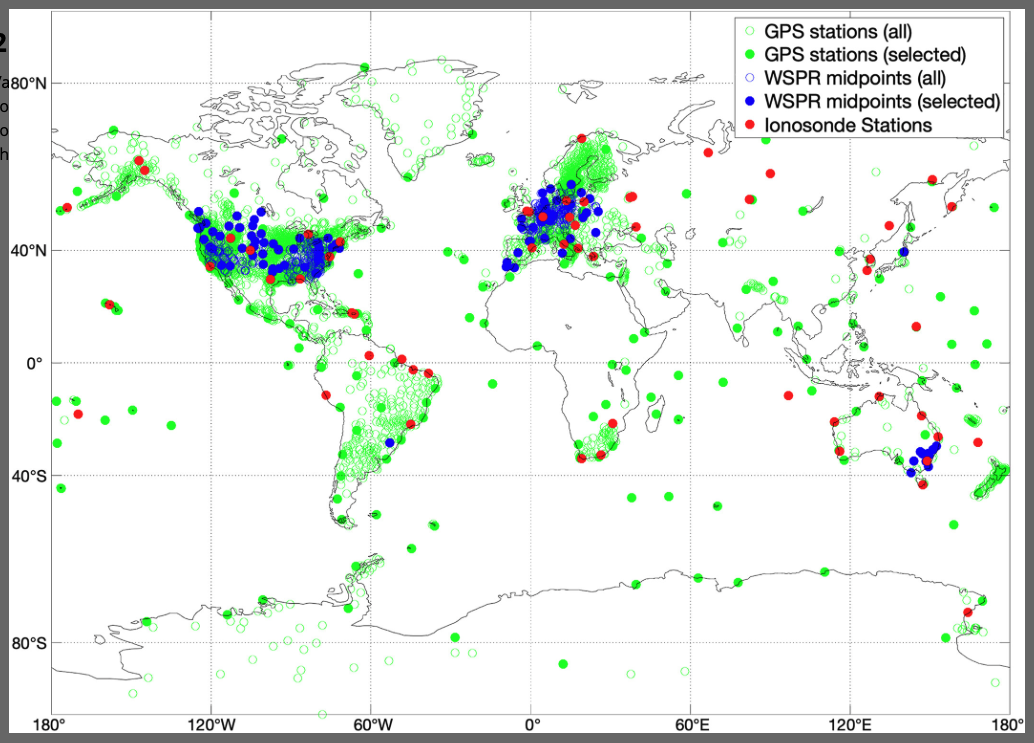
This map shows spatial GPS, Weak Signal Propagation Reporter (WSPR) and ionosonde data used in the study. Open circles indicate datapoints discarded for computational efficiency, while filled circles were used in the analysis. WSPR midpoints are shown for one representative time interval (0000–0100 UTC on 15 March 2019)
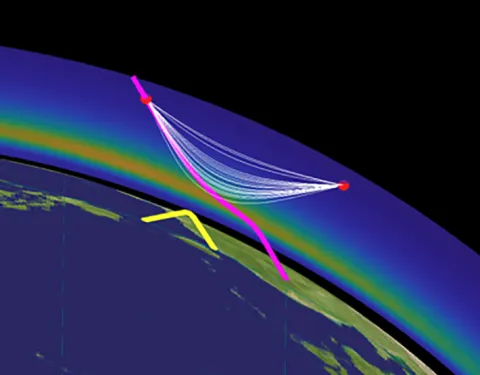
The lead image shows a 3D homing algorithm, developed by the authors, using the PHaRLAP engine. Shown are ground-to-ground (yellow), ground-to-space (magenta), and space-to-space (white) point-to-point raytracing. Satellites indicated in red.
The authors note that the underlying data sources and software are publicly available, so that interested groups may apply these tests to other models and time intervals.
Well known HamSCI VLF enthusiast Jonathan Rizzo, KC3EEY, recently received the Murgas Amateur Radio Club’s 2023 Ham of the Year award.
According to club president Tom Mayka, W3TRM, Jonathan was recognized “for his interesting experiments with his VLF receiver”, presentations to the club on that topic and for having some of his data appear in the ARRL’s QST magazine. Also noted was Jonathan’s dedication to HamSCI, evident through his participation in HamSCI workshops, the Dayton Hamvention, and frequent contributions to the HamSCI Google groups.
Jonathan is a 2021 graduate (BSEE) from the University of Scranton, currently employed as an electrical engineer.
The Murgas ARC is located in Wilkes-Barre, PA, and has been active since 1975. They support a wide range of amateur radio activities, sponsoring local nets, a hamfest, a club repeater, Field Day, and Volunteer Examinations (proctoring tests for ham radio licensing). The club is named after Fr. Joseph Murgas (1884-1929), a patent-holding pioneer in early radio technology who hailed from the Wilkes-Barre area.
Haystack is a radio science and technology research center, well known for astrophysical research using astronomical instrumentation at the cutting edge of technology. Of particular interest to HamSCI members are Haystack’s geospace projects, including remote sensing of the ionosphere and other atmospheric regions utilizing a wide range of electromagnetic frequencies. Haystack is also a leader in geodesy, the science of accurately measuring the geometric shape of the earth, its orientation in space and its gravity field.
Philip (B.S. 1987; Ph.D., 1998, Cornell University) has been a Haystack staff member since 1995. He previously served as Assistant Director (2015) and is currently Associate Director (2020). He assumes his new position in January, 2024.
The press announcement from MIT Haystack is available here.
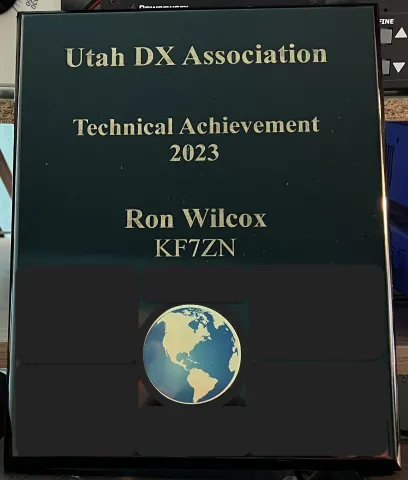
HamSCI member Ron Wilcox, KF7ZN, recently received the Utah DX Association’s 2023 Technical Achievement Award. The UDXA recognized Ron for promoting radio-related science topics to the amateur (ham) radio community.
Ron has given numerous virtual and in-person talks on subjects such as DX’ing (the art of making long distance contacts via ham radio), the ionosphere, radio wave propagation and solar eclipses. His audiences have ranged in size from dozens to perhaps thousands. He has presented at astronomy clubs, ham club meetings, the 2023 HamSCI Workshop, the Visalia DX Convention, and the QSO Today Ham Expo, an on-line convention with worldwide attendance. Not just an accomplished speaker, Ron’s byline has appeared in CQ Magazine and The Spectrum Monitor.
Ron has been a member of UDXA since 2013, and has served at various times as secretary, director, vice president and president. The club is based in Salt Lake City, Utah, with members across the state of Utah and beyond. It is an amateur radio club whose members are interested in HF DXing, awards, and contesting.
HamSCI Announces Initial Observations From 14 October Annular Solar Eclipse—Encourages Amateur Participation in Upcoming 8 April 2024 Total Solar Eclipse QSO Party
Dr. Nathaniel Frissell W2NAF, Lead Organizer for HamSCI (The Ham Radio Science Citizen Investigation) and assistant professor of physics and engineering at The University of Scranton W3USR, has announced initial observations from the October 14th annular solar eclipse across North America.
“The October 14th celestial event has provided some very interesting early data for ionospheric research” Frissell noted in working with the HamSCI scientific team. “While we are only in the early stages of analysis and looking ahead to the total solar eclipse across much of North America on April 8th, we are encouraged that our planned experiments with data contributed largely by amateur radio operators will yield a wealth of new discoveries in the next year or so.”
Hundreds of amateurs participated in the HamSCI event by getting on the air. Combining their data with contacts from other amateur contest activities, citizen-science cooperation contributed to one of the largest participatory days ever in amateur radio history.
This project is studying the ionospheric response to the 2023 annular and 2024 total solar eclipse through a series of large-scale citizen science experiments known as the HamSCI Festivals of Eclipse Ionospheric Science (FoEIS), which includes the Solar Eclipse QSO Parties (SEQPs). The data for these experiments are generated by amateur radio operators communicating with each other over and around the eclipse paths using medium and high frequency signals that are refracted back to Earth by the ionosphere, and therefore sensitive to eclipse-induced ionospheric changes. These Festivals are coordinated by the Ham Radio Science Citizen Investigation (HamSCI) in collaboration with volunteers from across the amateur radio community.
The FoEIS consists of six primary components—The Solar Eclipse QSO Party (SEQP), the Grape High Frequency Doppler Experiment, WSPRdaemon observations, the Medium Wave AM Doppler Experiment, the High Frequency Time Difference of Arrival Experiment (TDOA), and the Very Low Frequency (VLF)/Low Frequency (LF) Experiments....
...Dr. Frissell noted that participation and early outcomes were very successful at this annular eclipse. He is anticipating that the support by the amateur community and the collaboration among scientists on April 8th during the total solar eclipse will be even greater.
HamSCI serves as a means for fostering collaboration between professional researchers and amateur radio operators. It assists in developing and maintaining standards and agreements between all people and organizations involved. Its goals are to advance scientific research and understanding through amateur radio activities and encourage the development of new technologies to support this research. October 14th was a perfect example of that collaboration, and many events were reported by clubs and individual hams. A short selection of photos from individual events is linked below.
The Monday, April 8th total solar eclipse will be the last in North America for nearly twenty years. HamSCI again encourages participation by amateurs to take part in the SEQP, the WSPR Challenge and the other scientific experiments to be conducted that day. Eclipse-specific information can be found at www.hamsci.org/eclipse.
Is your club is looking for new and interesting things to do that involve the April 8, 2024 eclipse? HamSCI, its partners and supporters have a few ideas!
First and foremost, consider having members participate and compete in the HamSCI Solar Eclipse QSO Party or Gladstone Signal Spotting Challenges. The SEQP has a multi-operator entry category. Gather a group and operate from a member's home station or put on a Field Day style event - operate from the Great Outdoors, taking time, of course, to view the eclipse as it passes over North America.
► Print and distribute HamSCI flyers at your next club meeting. There are links to many HamSCI projects, some noted below. Challenge members to do something other than the same old things they've been doing with their licenses for years. (2 flyers exist - 'HamSCI General' and 'Eclipse Specific')
► You don't have to wait until the day of the eclipse - put the eclipse on your club's program schedule: Schedule a HamSCI speaker to inform the members about HamSCI's mission and the ham-friendly projects it supports.
►Build one or more Grape 1 Personal Space Weather Stations. Compare notes, compare results, see how the ionosphere reacts to space weather events such as solar flares and coronal mass ejections.
►Partner with a local astronomy club, before, during and after the eclipse. Exchange news and information on how the eclipse affects radio frequency signals, and learn about observations made in the visible light spectrum.
►Do you have club members who fluently speak 'SDR' (software defined radio)? Modern SDR rigs, such as the Flex product line, offer multi-slice reception. It might be possible to observe carriers from time standard stations (WWV, CHU) to observe eclipse effects on the various bands.
►Tools such as VOACAP allow amateurs to make propagation predictions (predictions of MUF and band openings). Club members could generate pre-eclipse predictions, operate during the eclipse, and discuss if or how the eclipse affected the propagation vs. the predictions.
►Local schools may be putting on eclipse 'parties' for their students. Offer to supplement their activities with live amateur radio demonstrations. Modes such as PSK31 and FT8 may grab the students' attention.
►Are club members familiar with WSPR, the Weak Signal Propagation Reporter mode? Simple, inexpensive WSPR radios are readily available (or you can use the same gear as is used for FT8). Transmitting WSPR is fun - but watching a QRPp WSPR signal propagate around the world, as noted by the WSPR receiving network, is fascinating.
►STEM opportunities - ideas from Mike Walters (ARRL). Help schools answer these questions: What causes an eclipse? Differences between annular and total solar eclipses, others?
Is your club is looking for new and interesting things to do during the April 8, 2024 eclipse? HamSCI, its partners and supporters have a few ideas!
The first and most obvious thought is to have members participate in the HamSCI Solar Eclipse QSO Party or Gladstone Signal Spotting Challenges. The SEQP has a multi-operator entry category. Gather a group and operate from a member's home station or put on a Field Day style event - operate from the Great Outdoors, taking time, of course, to view the eclipse as it passes over North America.
You don't have to wait until the day of the eclipse - put the eclipse on your club's program schedule: Schedule a HamSCI speaker to inform the members about HamSCI's mission and the ham-friendly projects it supports.
The paper reviews the history of amateur radio and science back to 1912, with the greatest emphasis on results that have emerged in the last decade. Dr. Frissell stressed the importance of this work by noting “This paper is the result of expanding and combining two white papers submitted to the National Academy of Sciences Decadal Survey for Solar and Space Physics (Heliophysics) 2024-2033, which helps the United States to establish research priorities for the next ten years. As such, this paper not only reviews past results, but also provides recommendations for amateur radio - professional science collaborations in the future from both technical and community-building perspectives.”
*Frontiers in Astronomy and Space Sciences is a multidisciplinary journal that unravels the mysteries of the universe and explores planetary science and extragalactic astronomy in all wavelengths.
HamSCI proudly joined dozens of other citizen science project teams at NASA’s Science Activation (SciAct) / Citizen Science (CitSci) Community Workshop held in Leesburg, VA, November 13-17, 2023. Conference attendees, leaders in the volunteer citizen science community, shared project success stories and future plans for their science and education based teams.
Emphasis was on the Heliophysics Big Year, a global celebration of the Sun’s influence on Earth. HamSCI is deeply involved with the HBY, with ongoing projects such as the Solar Eclipse QSO Parties (SEQP) and Personal Space Weather Stations (PSWS). The SEQP and PSWS are just a few of the events included in HamSCI’s Festivals of Eclipse Ionospheric Science. Both events were presented to workshop attendees, by way of an operating Grape 1 PSWS and displays of eclipse-inspired observations from the October, 2023 North American solar annular eclipse.
The October, 2023 North American annular solar eclipse may be past, but media coverage of that event, an element of HamSCI's Festivals of Eclipse Ionospheric Science, will live on in a wide variety of informative features. Magazines, websites, NASA produced videos, local and national news coverage tell the story of how HamSCI citizen scientists and researchers are contributing to science.
If you find yourself at a loss on how to explain what it is we do and why, check out the HamSCI FoEIS Media Hits page and find an article, YouTube video or website URL that you can copy and pass on to others. Most of the coverage has been short, to the point and well illustrated, perfect for introducing HamSCI to friends and acquaintances.
Media 'hits' are happening on a regular basis, so the list is expected to grow throughout 2023 and 2024. Many thanks to HamSCI members Ed WX2R, McKenzie KO4GLN, Bill K8TE, Gary AB4GH, Mary Lou KC2NMC, Ron KF7ZN, Stan KD1LE, Nick VE7DXR, Nathaniel W2NAF and others who have helped spread the word through authoring articles, podcast appearances, interviews, club meetings, social media posts, hamfest presentations and more.
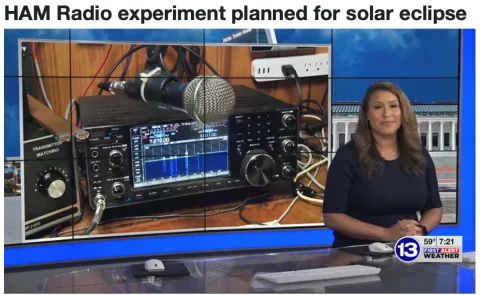
(Screen image from 13 Action News, WTVG, Toledo, Ohio)
Logistics: Project Leads, System Builders, Documentation, Web and User Support
Nathaniel Frissell, W2NAF
Kristina Collins, KD8OXT
Rachel Boedecker, AC8XY
Gary Mikitin, AF8A
Peter Nordberg, N1ZRG
Stan Pozerski, KD1LE
George Kavanagh, KB1HFT
Bob Reif, W1XP
Bill Blackwell, AB1XB
Jim Farmer, K4BSE
Joe Hobart, W7LUX
Chas (Randy) Allen, N4TVC
Operational: Grape System Hosts (data contributors)
Darrel Emerson, AA7FV
Bill Blackwell, AB1XB
Michael Hauan, AC0G
Todd Christell, AD0RR
David Kazdan, AD8Y
Gary Mikitin, AF8A
Gareth Perry (NJIT ARC), K2MFF
Jim Farmer, K4BSE
Milton Gibson, K9ATR
George Fremin III, K5TR
George Kavanagh, KB1HFT
Red Willoughby, KC4LE
Stanley Pozerski, KD1LE
Art Botterell, KD6O
Steve Miller, KD6SPB
Bob Benedict, KD8CGH
James Niemann, KD8SYG
Charles Skoning, KE9SA
Lee Phebus, KF7YRS
Chris Prosser, KI7DLN
Kirk Kendrick, KK2Z
Charles Smydeer, KK4HP
Beau Bruce, KM4YMI
Ward Silver, N0AX
Kerry Case, N1URT
Peter Nordberg, N1ZRG
Steve London, N2IC
Randy Allen, N4TVC
John Gibbons, N8OBJ
Bill Echols, NI5F
Robert Wagenvoort, PA0RWT
Drs. Wim Apon, PA0SLT
David Evans, VA7DXX
Dave Swartz, W0DAS
Bob Reif, W1XP
Nathaniel Frissell, W2NAF
Ethan Yoshio Kita (Cal Poly ARC), W6BHZ
Joe Hobart, W7LUX
Mike Bass, WA9TKK
Edward Hall, WC0Y
David Hinerman, WD8CIV
Walt Lilly, KE0KVI
John Lauber, WI6P
Grants Leadership: Roles and Institutions
Dr. Nathaniel Frissell, Lead Principal Investigator, The University of Scranton
Dr. Travis Atkinson, Co-Investigator, The University of Alabama
Dr. Christian Zorman, Co-Investigator, Case Western Reserve University
A number of the individuals listed in the sections above have authored papers and/or presented at workshops and conferences on the Grape 1 and associated topics. Links to their publications and presentations can be found by searching for their names on the HamSCI website.
HamSCI would like to recognize these organizations for their support:
HamSCI wishes to acknowledge National Science Foundation grants AGS-2002278, AGS-2230345, AGS-1932997, AGS-2230346, AGS-1932972
Any errors or omissions on this page are solely the responsibility of this page’s editor, Gary Mikitin. He may be contacted, with corrections or suggestions, via [email protected].
Version 1.4, 17 Feb 2024 - Added link to Ubuntu/GNU Radio image
Background and Purpose
This page holds the system documentation for the HamSCI Grape 1-DRF systems, which were first deployed in September of 2023.
'Grape 1-DRF systems' are Grape 1 Low-IF Doppler receivers, connected to Raspberry Pi single board computers through an audio interface, generating data in the Digital RF format. Data is uploaded to the Personal Space Weather Station Central Control System. The full 'Grape 1 story' is available here on the HamSCI website.
This page is a living document - updates and additions are expected to be made on a regular basis.
System Documentation (click on the titles to open the documents)
This document was originally written by the New England Grape Group for recipients of fully assembled Grape 1-DRF systems. Much of the information is valuable to system builders. Abbreviated contents:
Forward from Nathaniel A. Frissell, W2NAF, Ph.D, Principal Investigator, Grape Project
Author: Chas (Randy) Allen, N4TVC. VNCs (virtual network connections) allow Grape 1-DRFs to be operated from a remote computer, eliminating the need for a dedicated keyboard, mouse and monitor.
Steve, WA5FRF will be on the air from Texas, with several prearranged stations in a roundtable.
Other hams are welcome to join in to practice sending and receiving the waveform.
Those that can copy me can send me the .wav file for a quality check via email: [email protected]
The documentation needed along with the recorded waveform are station location (6 digit grid square), date and time of day of the recording, and frequency.
Participants are encouraged to read theTDOA Operating Tips prior to the test dates.
Listen for WA5FRF, EL09nn, near San Antonio, Texas
Saturday, 30 March, 1600UTCInitial Run - Join the roundtable QSO - Listen or transmit chirp signals, your choice
1600z-1615z 60 m, Ch 1 or if busy Ch 2.
1615z-1630z 40 m on or around 7265 and up
1630z-1645z 20 m on or around 14265 and up
1645z-1700z 15m on or around 21265 and up
If the listed frequencies are busy expect to move up the band to the first clear frequency.
Alternatives
Stations that do not have propagation to Texas are encouraged to set up their own dry runs in their own regions. Of course, they do not have to adhere to these dates but they should pick a time between 1600 and 1700 UTC to get propagation conditions representative of when the eclipse will be passing over their region.
HamSCI events were the topics of two recent articles appearing in American Radio Relay League (ARRL) publications.
The October, 2023 issue of QST magazine featured a story entitled 'HamSCI Workshop 2023: A Radio Science Collaboration'. The Workshop was held at the University of Scranton in mid-March, and the article gave a synopsis of the presentations, poster sessions and other activities which took place during the two day event. QST is read by thousands of ARRL Members each month. It is the flagship journal of the ARRL.
The September/October issue of On The Air carried a story on how and why an amateur radio operator would want to operate in HamSCI's Solar Eclipse QSO Parties. OTA a bi-monthly magazine aimed at those just getting into (or back into) the hobby of amateur radio.
Both journals are published exclusively for ARRL members, available in print and on-line. A sample issue of OTA is available on the ARRL website.
Explore the world of ham radio citizen science with HamSCI's exciting social media channels!
Engage in captivating discussions, receive real-time updates, and gain insights into the latest developments in ionospheric research. Connect with a dynamic community of radio enthusiasts, experts, and scientists, all dedicated to novel uses of communication technology. Follow us on Facebook, Twitter, Discord, Reddit, and Instagram to stay informed of groundbreaking experiments and interact with fellow enthusiasts. Come join our lively community today and help us advance the frontiers of amateur radio and scientific exploration at HamSCI!
Submitted by HamSCI member McKenzie Denton, KO4GLN
Dozens of Grape Personal Space Weather Stations are now on the air, and the network is growing on a regular basis. In the last week, stations in Cleveland, OH and Jacksonville, FL were added to the Grape network. They were Node numbers 63 and 64, respectively. You can learn more about the Grape 1, including all of the details needed to build, operate and contribute data to the HamSCI PSWS Grape Server here. The full Grape story, with links to the Grape 1 and the up and coming Grape 2 are here on the HamSCI site.
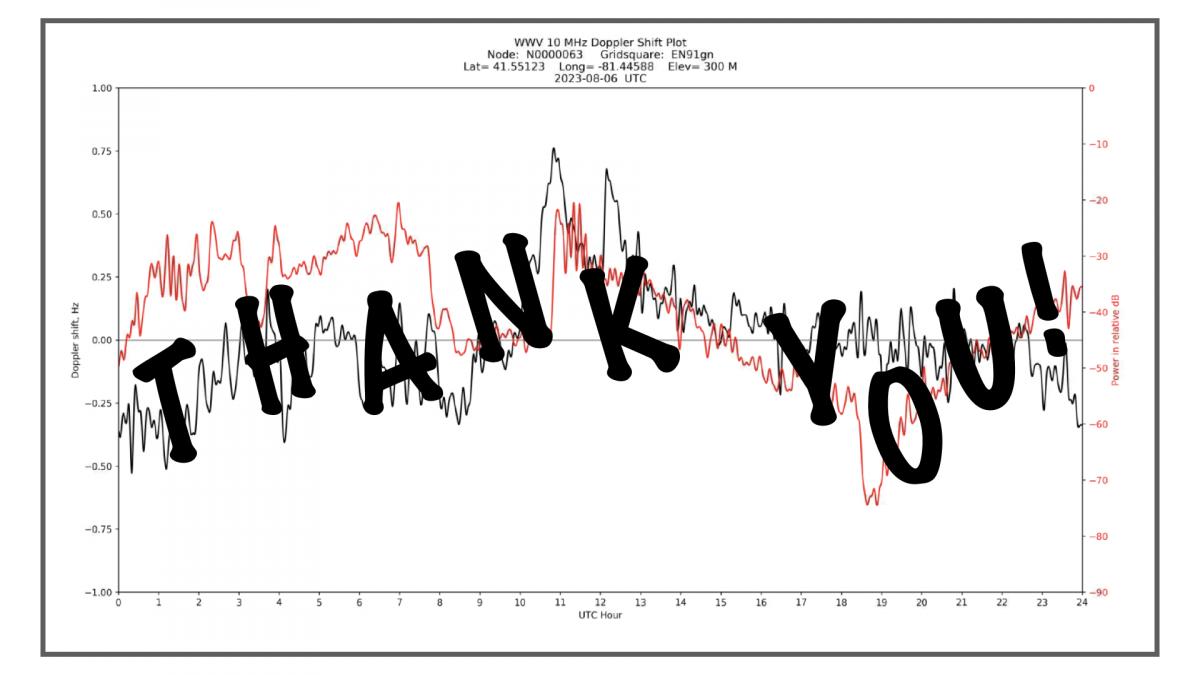
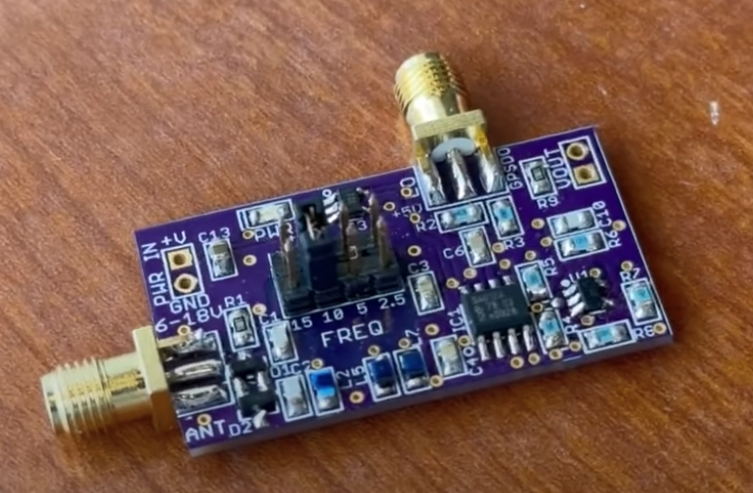
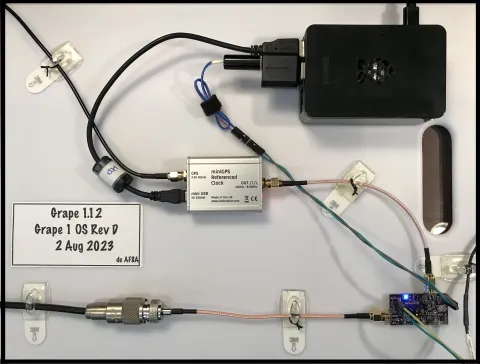
Pictured here is the Grape 1.12 station of Gary Mikitin, AF8A, located in grid EN91gn, 15 miles east of Cleveland, Ohio. Key components in the photo are the Grape Low IF Doppler Receiver PC Board (lower right), a Raspberry Pi 4B with USB audio interface (upper right), and a Leo Bodnar miniGPS referenced clock (center). Gary's station is set to receive WWV/WWVH on 10 MHz. It is uploading data nightly to the HamSCI Grape PSWS server, hosted by the WWV Amateur Radio Club (WW0WWV). Not shown are the power supplies, GPS antenna and Chameleon RXL preamplified receiving loop located in the attic of Gary's home.
More than 50 researchers will be in Alaska in August for the resumption of a science summer school that culminates with experiments at the High-frequency Active Aurora Research Program facility operated by the University of Alaska Fairbanks Geophysical Institute.
The Polar Aeronomy and Radio Science Summer School was last held more than 10 years ago. Its return is provided for as part of a five-year $9.3 million National Science Foundation grant awarded to UAF in 2021. That funding allowed creation of the Subauroral Geophysical Observatory for Space Physics and Radio Science at HAARP. - Rod Boyce, University of Alaska Fairbanks Geophysical Institute
“The return of PARS marks a milestone for HAARP and the geospace communities,” HAARP Director Jessica Matthews said. “With a strong foundation laid during previous PARS events from 2000 to 2012, PARS 2023 is committed to meeting the growing demand for skilled scientists and engineers with knowledge of the special effects that occur in the ionosphere at high latitudes.”
The program runs Aug. 1-14. Participants will spend the first few days in classes and experiment design at the Geophysical Institute, have two full days of recreation in Valdez and then spend several days at HAARP in Gakona, Alaska, to run their experiments. Details on the experiments (the Final Transmission Notice) are available on our Google group, https://groups.google.com/g/hamsci/c/8c2-UNIc3T4
PARS participants experience the complete scientific process, from background research to experiment design and execution and, finally, to results and analysis.
Researchers, including faculty and students, from the following institutions will attend: University of Alaska Fairbanks, Air Force Institute of Technology, Auburn University, Georgia Institute of Technology, Los Alamos National Lab, University of Colorado Boulder, University of Colorado Denver, University of Florida, University of Houston, University of New Brunswick, Virginia Tech, Naval Research Laboratory, Cornell University, International Institute for Astronautical Sciences and Canada Council for the Arts.
The PARS campaign has over 30 experiments dealing with such diverse topics as very low frequency radio wave generation, detection of irregularities in Earth's ionosphere, ocean remote sensing, atmospheric remote sensing and space debris detection.
And there’s one experiment that is of an artistic nature.
“Ghosts in the Airglow” by Canadian artist Amanda Dawn Christie is a transmission art project through HAARP that mixes audio and images from the transition between Earth’s atmosphere and outer space. Shortwave radio listeners from around the world are invited to tune in and submit reception reports online through the project’s website.
The 2021 National Science Foundation grant provides funding for observatory operations, for financial support for travel and time at the facility for scientists, and for education and community outreach. Research is initially expected to include the study of various types of aurora and other occurrences in the ionosphere, which stretches from about 50 miles to 400 miles above the Earth’s surface.
The UAF Geophysical Institute operates HAARP under an agreement with the Air Force. In August 2015, the Air Force transferred the research equipment to UAF under an Education Partnership Agreement.
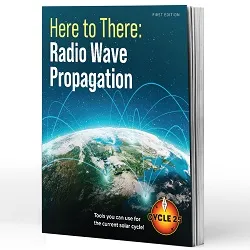
Multiple members of the HamSCI Community contributed content to the new book Here to There: Radio Wave Propagation, recently published by the American Radio Relay League.
Book chapters include the following: Fundamentals of Radio Wave Propagation, The Sun and Solar Activity, Sky-Wave, or Ionospheric, Propagation, VHF and UHF Non-ionospheric Propagation, Propagation Predictions for HF Operation, VHF and UHF Mobile Propagation and Amateur Radio and Ionospheric Science.
HamSCI contributors include:
Carl Luetzelschwab, K9LA Frank Donovan, W3LPL Ward Silver, NØAX Ethan Miller, K8GU Hermann Schumacher, DF2DR Nathaniel Frissell, W2NAF
News flash! The data from the 2023 Medium Wave Recordings Event is available on Zenodo. More information can be found here
Ver 1.0
20 Jun 2023
Many in the medium wave (MW) listening community are eager to participate in HamSCI's efforts to better understand ionospheric dynamics, especially as they impact radio wave propagation. The upcoming North American solar eclipses ofOctober 14, 2023 andApril 8, 2024 will present excellent opportunities for listening stations to participate by recording IQ data from software defined radios. If you are interested in participating, please complete the pre-registration form at the bottom of this page.
This page details the background, purpose and how to participate in making and sharing those recordings. It is one of many events being held during the Festivals of Eclipse Ionospheric Science.
Background
AM broadcast stations ideally transmit a continuous strength carrier at a fixed frequency. Therefore, changes in the carrier's frequency characteristics observed at a distant receiver are often due to changes in MW propagation between transmitter and receiver. Rapidly changing listening conditions during the upcoming solar eclipses will be indicative of a rapidly changing ionosphere, and broadband recordings made during the eclipse could be useful to researchers who want to gain a better understanding of the Earth's ionospheric dynamics.
AM Broadcast Band DXers know from past experience that the blocking out of radiation from the sun can introduce temporary night time listening conditions over an area far beyond the path of annularity or totality. During the eclipses, many MW hobbyists (who, in this capacity, will be contributing as citizen scientists) will be live listening as well as recording the entire medium wave band using software defined radios (SDRs), searching for unusual DX.
Multiple science questions might be investigated using IQ recordings made by AM broadcast band DXers:
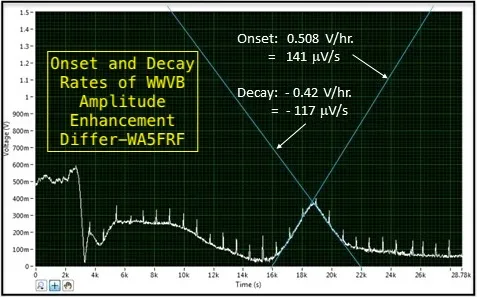
Is eclipse ionospheric response symmetric with regard to onset and recovery timing? Post-eclipse analysis may indicate that rate of signal strength increase (pre-eclipse) versus rate of signal decay (post-eclipse) differ. Confirmation of that phenomena may lead to theories explaining it.
How similar is the eclipse effect on propagation (which occurs very rapidly, as the moon moves at supersonic speeds, crossing between the Sun and the Earth) to that of the daily dawn and dusk terminator passages (which occur slowly, as part of ordinary diurnal cycle)? Broadband recordings of the entire AM broadcast band - including sunrise, the eclipse event and sunset - could have great value.
If SDRs are used that have their frequency determining components disciplined by an accurate and stable external oscillator, Doppler shifts caused by movement of ionospheric layers can be derived from apparent shifts in the frequency of the carriers of AM broadcasting stations. (A discussion of such Doppler shifts can be found at hamsci.org/grape.) Some of this recorded data may also be a useful input to another HamSCI experiment: “Tracking Traveling Ionospheric Disturbances Using Doppler-shifts of AM Broadcast Stations” (under development - please check back).
If you have questions regarding MW Recordings, please send them to [email protected]
How to Participate
A number of SDRs commonly used by AM Broadcast Band DXers should be able to provide good scientific data from users’ IQ recordings, such as the Microtelecom Perseus, Elad S-2 and S-3, RFSpace SDR-IP, NetSDR and CloudSDR, SDRplay RSPdx, Winradio series of SDRs etc.
To obtain the best quality data using such receivers:
Document receiver, software and antenna used, including as many details as possible of setup, such as front end attenuation settings.
If possible, turn automatic gain control (AGC) off.
Use your normal broadband antenna for receptions during the eclipse, but please do not change antennas or make any other changes to the system while recording. If you absolutely must make a change, that change should be fully documented.
Time keeping will be very important. Make sure that timestamps in the recorded data are as accurate as possible by setting the computer clock to a known reference. Use of network time protocol software on the SDR's host computer would serve the purpose well (many recommend Meinberg NTP).
Start recording well before maximum totality in your area, until well after that time. At minimum, please start recording one hour before the partial eclipse starts and finish one hour after the partial eclipse ends. The Solar Eclipse Circumstances Calculator for October, 2023 and for April, 2024 can tell you when the eclipse starts and finishes at your location.
More helpful yet for researchers would be for DXers to record from six hours before to six hours after maximum eclipse annularity (2023) or totality (2024) at their location, as that time period will correspond to observations that will be made on the HF bands. For the truly committed, being able to record for 24 hours before the day of the eclipse and 24 hours afterward as well as the 24 hours on the day of the eclipse would provide “control days” to be compared with the time period around the eclipse.
Warm up the receiver for several hours before starting recording, to minimize frequency drift in recorded signals.
If your SDR can be locked to a frequency standard such as a Bodnar GPS Reference Clock, please use it, as that will improve data quality, and will make receiver drift less of a concern.
If possible, make additional SDR recordings of, for example, two hours before and after sunset and sunrise on the day of the eclipse.
As the actual eclipse is a unique event, doing trial run recordings in the month before an eclipse is encouraged, both at the time of day when the eclipses will occur, and during the more changeable receiving conditions near sunrise and sunset. Trial runs can help minimize errors on the eclipse days themselves.
Post-Eclipse Data Submission
The research community uses various public databases to store data collected in these events. They allow for open access, and long-term (many years') storage. Once the database has been chosen and upload procedures established, they will be detailed on this page.
Participants could suggest channels of further interest to researchers in the recordings, based on their own DX receptions, and from a preliminary look through the data, using software such as Carrier Sleuth or Data File Analyser. Perseus owners running Jaguar SDR will also have this capability. If participants have interest in learning more about processing their data, and how they might assist in analysis, guidance will be available from HamSCI members.
Please bookmark this page and join the HamSCI eclipse mailing list for future announcements related to the HamSCI MW Recording Event.
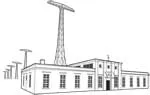
SAQ (callsign SAQ) is a VLF transmitting station located in Grimeton, Sweden and is a UNESCO World Heritage Site operated by the Alexanderson Association. The heart of the transmitter is the Alexanderson Alternator and six antenna towers that are iconic to the site. Twice a year, there is a CW transmission at 17.2 kHz with an inspirational message to listeners all over the world. On Alexanderson Day, July 2nd, 2023, SAQ is scheduled to be on the air. More details can be found here (https://alexander.n.se/en/alexanderson-day-2023/) and contains a tentative schedule and a YouTube live broadcast for those who would like to watch the event live.
HamSCI community members are encouraged to listen to the transmission at 17.2 kHz. There are various ways to listen, including VLF to HF converters for those who want to use their own HF rig; SDRs like the AirSpy R2, KiwiSDR, and others; and broadband VLF receivers/preamps connected directly to computer soundcards using vlfrx-tools, Spectrum Lab, or SAQrx software. If you are able to receive the transmission, please submit a reception report to SAQ via instructions on the website and please make a recording as well.
In the VLF band, signals propagate the same way as signals in a waveguide due to the Earth-ionosphere waveguide with boundaries formed by the Earth's surface and the D/E layers of the ionosphere. These VLF transmissions are important to science because they give greater insight to VLF propagation as well as the D and E layers of the ionosphere.
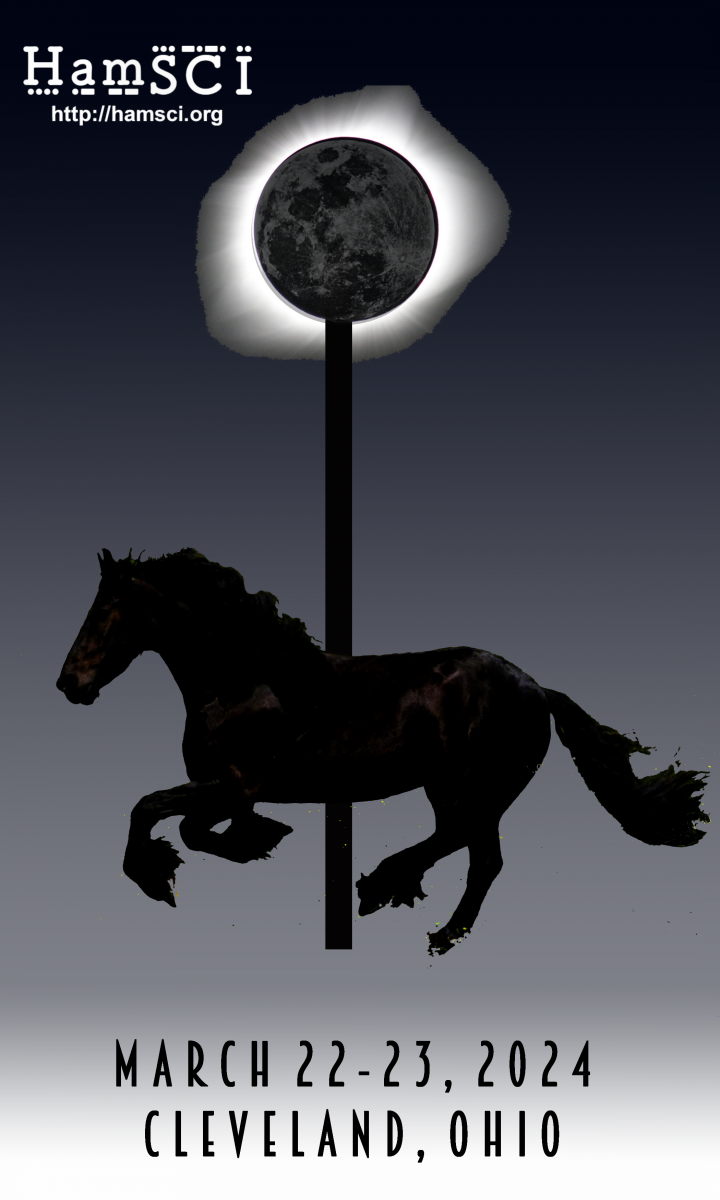
Come join HamSCI at its seventh annual workshop! The workshop will be held March 22-23, 2024 at Case Western Reserve University in Cleveland, OH and seeks to bring together the amateur radio community and professional scientists. Anyone interested in this workshop is invited to join.
The workshop will focus on the theme of Alignments - between the Sun, Moon and Earth; between collegiate amateur radio recreation and STEM curriculum; between data collection and analysis; between professional and citizen science. We are preparing for the solar eclipse of 8 April 2024, for which Cleveland will be in totality.
HamSCI's chief area of interest is the use of amateur radio techniques for the characterization and study of ionospheric phenomena such as traveling ionospheric disturbances, sporadic E, response to solar flares, geomagnetic storms, the 2024 total solar eclipse other space weather events. In order to facilitate this science, continued development of the HamSCI Personal Space Weather Station and discussion of integration of amateur radio into the collegiate curriculum will also take place. We will also accept presentations relating to amateur radio and science, particularly space and atmospheric science, space weather, and radio astronomy.
Abstract: A bit more than ten years ago we made a discovery. We identified, and then archaeologically re-identified, a relationship between magnetic objects on the Sun at a range of spatial scales and the Sun's 22 year Magnetic (or Hale) Cycle. That pattern (unfortunately) is called the "extended solar cycle". Further, that investigation identified a specific event that occurs at the very end of Hale Cycles, the 'terminator,' as being a critical component NECESSARY to explain how the Hale Cycle shapes the Sun's 11(-ish) year activity cycle. Fast forward a decade and we have successfully identified the terminator events going back beyond the earliest photography of the Sun (1860) to the mid-eighteenth century. Those 24 events permitted a forecast of Sunspot Cycle 25 to be made. That forecast became a 'litmus test' for what we understand about the solar activity cycle and the mechanism that generates and sustains the Sun's large-scale magnetic field. Why? Because the forecast we arrived at was 100% greater than that resulting from an assessment of the spectrum of models and forecasts in the community. We have been testing our hypothesis of the Sun's magnetism in real time since 2019. In this presentation we'll discuss the present status and talk about where things could go from here.
Biography: Scott McIntosh is the deputy director of the National Center for Atmospheric Research (NCAR) and the former director of NCAR's High Altitude Observatory (HAO). McIntosh received his First Class Honors Degree in mathematics and physics and his Ph.D. in astrophysics from the University of Glasgow, Scotland. His research in the field of solar physics has focused on three main areas: the detection and impact of magnetohydrodynamic waves; the detection and understanding of ultraviolet and extreme ultraviolet radiation; and understanding the decadal evolution of the solar plasma. McIntosh has authored or co-authored over one hundred and fifty articles in peer-reviewed journals, with fifty-two as first author, including twelve high-profile papers in journals like Nature and Science. His current “H- index” of forty-four [>8,200 citations] covers subjects in solar physics, space weather research, atomic physics, and instrument development. Recently McIntosh has examined the evolution of ubiquitous emission and magnetic features in the Sun’s outer atmosphere that demonstrate a clear link to the processes which drive the quasi-periodic appearance of sunspots. Monitoring the evolution of these features can help us understand how the Sun’s radiative, particulate and eruptive output modulate on annual, decadal with a real insight into evolution across weekly, seasonal, decadal to the centennial scales that are pertinent to climate through the detection of magnetized Rossby waves in the sun’s interior.
Abstract: High Frequency (HF) raytracing is a tool to study the propagation of HF radio waves through the ionosphere. This presentation will cover the basics of raytracing, including typical inputs and outputs. We will review the different physics that may be included in the raytracer and how changes in the ionosphere may affect the radio wave propagation. A brief description of how to use a raytracer for common applications will be provided. The applicable frequency ranges and limitations of this technique will be also discussed.
Biography: Dr. Kate Zawdie is a Research Physicist in the Space Science Division at the US Naval Research Laboratory (NRL) in Washington, DC. She received a Ph.D. in Physics from the University of Maryland, College Park in 2015. Dr. Zawdie’s main research interests are simulating mesoscale ionospheric phenomena and high frequency (HF) radio wave propagation in the ionosphere. Her ionospheric modeling work has focused on topics such as Large Scale Traveling Ionospheric Disturbances (LSTIDs), Medium Scale Traveling Ionospheric Disturbances (MSTIDs), Equatorial Spread F (ESF) and artificial HF heating. Part of Dr. Zawdie’s work at NRL has also been to examine the effect of HF heating and plasma releases on ionospheric electrodynamics, using models to determine whether experiments can control the growth of natural ionospheric instabilities such as equatorial spread F (ESF). She has held significant roles in model development at NRL including major contributions to the MoJo-15 (Modernized Jones code) HF propagation model.
Abstract: KA9Q-radio is a general purpose open source software defined radio (SDR) that uses fast convolution and IP multicast to digitally downconvert, demodulate and distribute hundreds of simultaneous channels from hardware front ends such as the RX888, Airspy R2/HF+ and RTL-SDR using only modest hardware such as the Raspberry Pi and X86-64. No special hardware is needed such as an FPGA or GPU. Example applications include FM repeater monitoring and the HamSCI wsprdaemon project.
Biography: Phil Karn, KA9Q, is the developer of the KA9Q Software Defined Radio system and a board member of Amateur Radio Digital Communications (ARDC). He earned a bachelor's degree in electrical engineering from Cornell University in 1978 and a master's degree in electrical engineering from Carnegie Mellon University in 1979. From 1979 until 1984, Karn worked at Bell Labs in Naperville, Illinois, and Murray Hill, New Jersey. From 1984 until 1991, he was with Bell Communications Research in Morristown, New Jersey. From 1991 through to his retirement, he worked at Qualcomm in San Diego, where he specialized in wireless data networking protocols, security, and cryptography. Phil has been an active contributor in the Internet Engineering Task Force, especially in security, and to the Internet architecture. He is the author or co-author of at least 6 RFCs, and is cited as contributing to many more. He is well known in the amateur radio community for his work on the KA9Q Network Operating System (NOS), named after his amateur callsign. He also created early 9600 bit/s FSK radio modems. In the early 2000's, Karn worked to introduce forward error correction into Amateur radio satellites, applying it to the 400 bit/s PSK telemetry from the AO-40 satellite. He won the 1989 Specific Achievement Award at the Dayton Hamvention.
Meeting Location and Parking
The Friday sessions and Saturday morning sessions will be held in Eldred Hall on the CWRU campus. The Friday evening banquet will be held at the Cleveland History Center. On Saturday afternoon, after lunch, the conference proceedings will continue at CWRU's think[box], a student manufacturing facility and makerspace that is open to the public. Attendees will participate in tours of think[box] facilities; tours of the Case Amateur Radio Club, W8EDU; and an amateur radio licensing session. There will also be time available for breakout sessions and committee discussions. The conference will close on Saturday evening with a screening of Frequency at CWRU Film Society. Tickets to the film are complimentary with a conference badge.
Paid parking is available near each venue. Near Eldred, participants are advised to park in the Veale Garage. Parking for the History Center is available behind the building. When visiting think[box] and the other destinations on the Case quad (W8EDU, Film Society), attendees may park in the Veale Garage and enter think[box] through Veale Center.
Breakfasts, Lunches, and Friday Banquet
Breakfasts, lunches, and coffee breaks are included with registration for both Friday and Saturday. Special dietary needs can be specified when registering.
The Friday Banquet Dinner will be hosted at the Cleveland History Center. Banquet tickets are included with Friday registration. Separate/additional banquet tickets may be purchased as needed.
Lodging
The primary hotel for the HamSCI workshop will be the Cleveland Courtyard by Marriott. Other nearby hotel options include Glidden House and the Tudor Arms Hotel, both within walking distance of the conference. Please ask for the CWRU rate when making your reservations.
Flight Information and Ground Transportation
Easy access to CWRU and the HamSCI meeting is available through the RTA Red Line, which connects directly to Cleveland Hopkins International Airport. If coming from the airport, take the Red Line to the University Circle station (quad) or Little Italy station (Marriott).
Talk-In Frequencies
Every party should have a call-in frequency; if you have an HT, check in en route to ask directions or say hello.
Primary Simplex: 146.55 MHz
Secondary Simplex: 432.10 MHz
Repeater: KD8LDE/R 442.28750 MHz + 131.8 Hz
Film Screening
Don't forget to join us Saturday night at the CWRU Film Society for a screening of Frequency on 35mm film! Film Society is CWRU's student-run movie theater and boasts full projection capabilities in 35mm, 70mm and 4K digital on a 21-foot movie screen with Dolby 5.1 sound. The concession stand offers fresh popcorn, soda and a wide selection of candy at reasonable prices. HamSCI attendees will be provided with free tickets to both screenings of the film (7pm and 9:30 pm). Make sure to catch the trailer reel for a screening of Nathaniel's original short film QLF!
Local Organizing Committee
Mr. Nathaniel Vishner, KB1QHX, Chair
Mr. Matthew Canel, KE8NZR
Dr. Kristina Collins, KD8OXT
Mr. John Gibbons, N8OBJ
Dr. David Kazdan, AD8Y
Mr. Gary Mikitin, AF8A
Science/Program Committee
Dr. Nathaniel Frissell, W2NAF, Chair, The University of Scranton (Assistant Professor)
Dr. Kristina Collins, KD8OXT, Space Science Institute
Mr. Jesse Alexander WB2IFS, NRAO
Ms. Rachel Boedicker AC8XY, Case Western Reserve University
Dr. Gareth Perry, KD2SAK, New Jersey Institute of Technology
Mr. Bill Liles, NQ6Z, HamSCI Community (Diversity Recruitment Chair)
Dr. Phil Erickson, W1PJE, MIT Haystack Observatory (Director of MIT Haystack Observatory)
Mr. Gary Mikitin, AF8A
Questions?
If you have questions, please e-mail [email protected]. Logistics questions will be directed to Nathaniel Vishner KB1QHX (216-368-4580) and science/program questions will be directed to Nathaniel Frissell, W2NAF (973-787-4506).